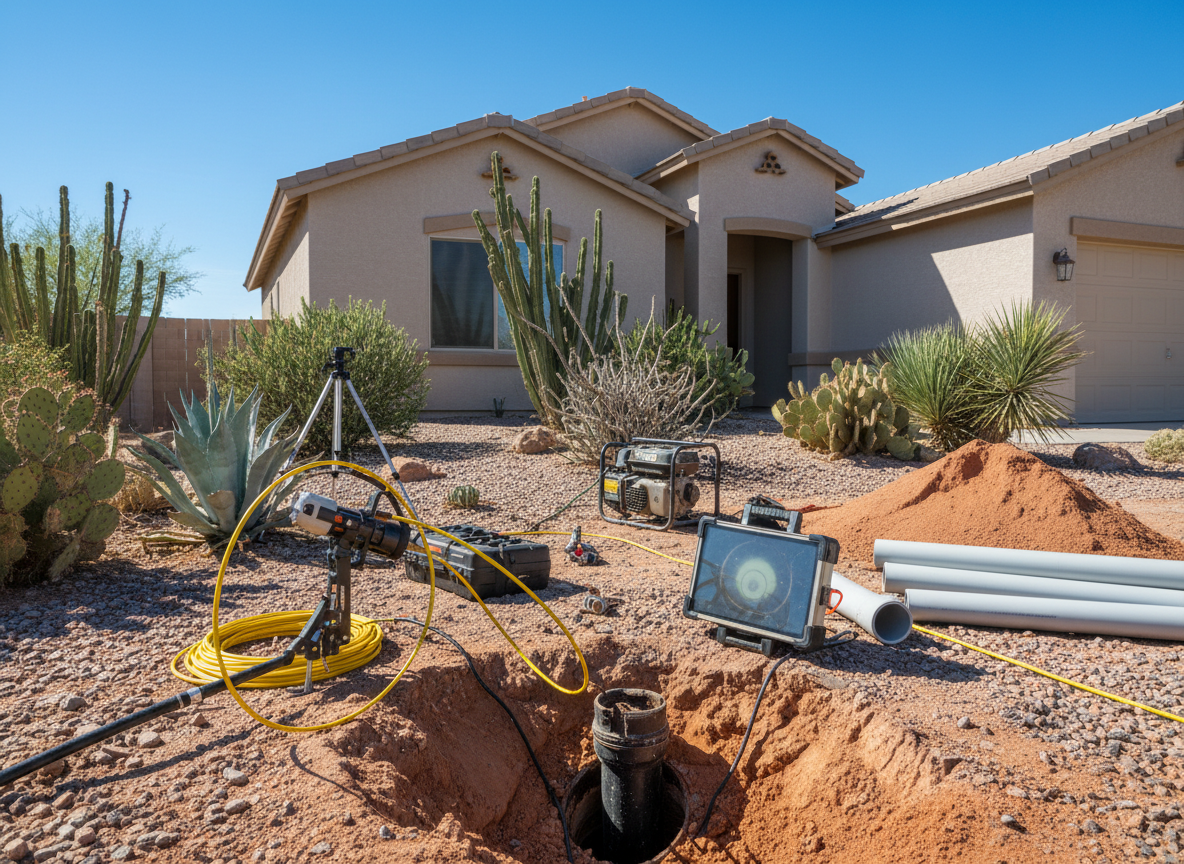
Contractors begin sewer line inspection by accessing cleanouts or removing fixtures to insert a camera head attached to a flexible cable. The camera travels the line while recording video and noting distance markers, allowing precise location of cracks, offsets, and intrusions. In Washoe County, high desert soils often contain caliche layers that shift during freeze-thaw cycles, stressing older clay or cast iron pipes. Footage reveals root infiltration from nearby trees and expansive clay movement that narrows pipe diameter over time.
Inspection determines whether spot repair, CIPP lining, pipe bursting, or open trench replacement is appropriate. Spot repair targets isolated failures without disturbing the full run. CIPP lining creates a new pipe inside the old one when walls remain structurally sound. Pipe bursting fractures the existing line while pulling in new HDPE or PVC. Open trench is reserved for severe collapses or when permits require full exposure. Nevada regulations require excavation permits in many Washoe County locations, and inspectors must flag any utility conflicts before work proceeds.
Homeowners receive a written report with video files, still images, and recommendations tied to observed conditions. Warnings include avoiding chemical root killers that can damage older pipe materials and noting that winter freezes can worsen existing cracks. Carson City and Sparks properties often share similar soil profiles, so findings from one neighborhood frequently apply to nearby homes built in the same era.
Technician insight
In Reno, the thing that catches most people out with Sewer Line Inspection is caliche layers sitting just below the surface; the camera shows the pipe is fine until the bit hits that hard pan and you realize any repair will need a jackhammer before the first foot of trench is dug.
Sewer Line Inspection Services We Offer
✓Video Camera Sewer Line Inspection
Camera equipment travels the full line length to document cracks, root entry, and pipe material changes that affect repair choices.
✓Hydrostatic Pressure Testing
Water pressure checks reveal leaks or weak joints not visible on camera, especially useful after suspected expansive clay movement.
✓Locate and Mark Sewer Lateral
Electronic locating pinpoints the exact path and depth of the sewer line to avoid conflicts during any future excavation.
✓Root Intrusion Assessment
Inspection identifies root entry points common in Nevada soils and determines whether mechanical cutting or full lining is required.
✓Pipe Material Identification
Camera review confirms clay, cast iron, or PVC construction so the correct trenchless or open trench method can be selected.
How it works
- 1
Schedule Access Point Review
The contractor confirms cleanout locations and property access before bringing equipment to the site.
- 2
Camera Insertion and Recording
The camera travels the line while distance and condition data are captured for later analysis.
- 3
Report Generation
Findings are compiled into a document that lists defects, soil factors, and recommended repair options.
- 4
Contractor Referral
The referral service connects the homeowner with a local contractor who reviews the report and discusses next steps.
Pricing
Pricing depends on the job and is discussed with the contractor after you call